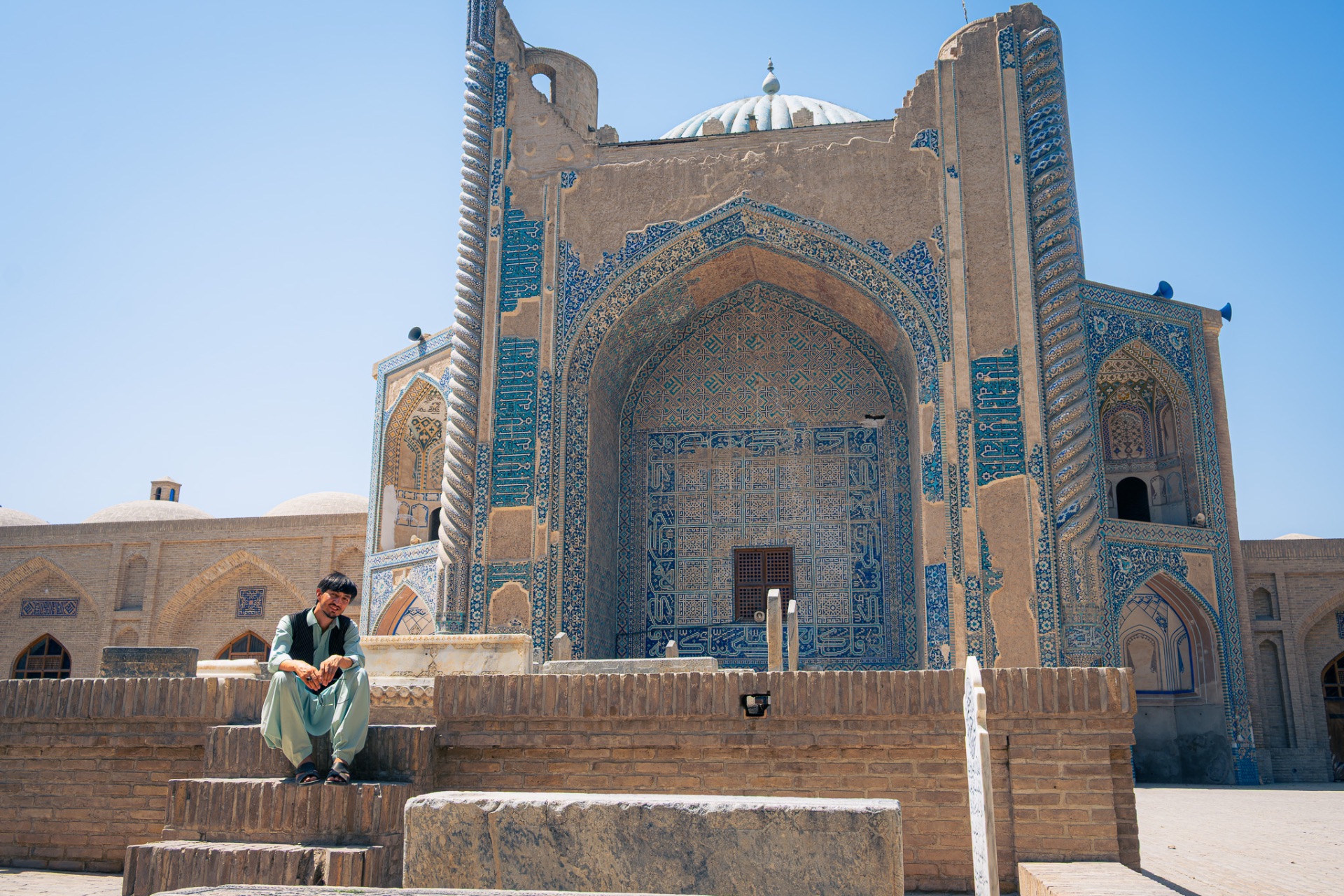
In the heart of ancient Balkh, surrounded by gardens and the remains of a city once known as the Mother of Cities, rises the striking shrine of Khwaja Abu Nasr Parsa. Its turquoise dome, monumental portal and intricate tilework belong to the great architectural traditions that flourished across Central Asia during the Timurid age. Yet this is more than an architectural monument. The shrine stands in a landscape filled with poets, mystics and stories that have shaped the cultural memory of Balkh for centuries. Among them is one of Afghanistan’s most poignant literary figures: Rabia Balkhi, the legendary tenth-century poet whose story of poetry, forbidden love and tragedy is still remembered more than a thousand years later.
History & Details
Khwaja Abu Nasr Parsa was an influential fifteenth-century scholar and mystic associated with the Naqshbandi Sufi tradition. After his death in Balkh in 1460–61, a shrine was established around his grave. The complex developed over the following generations, eventually becoming one of the most distinctive Islamic monuments of Balkh. Its architecture reflects the artistic world that connected Afghanistan with Herat, Samarkand and the wider Persianate lands. A monumental entrance rises beneath a great ribbed dome, while surviving turquoise tiles, geometric patterns and traces of elaborate decoration hint at the splendour the building once possessed. But nearby lies a much older story. A tomb in the grounds is traditionally associated with Rabia Balkhi, remembered as one of the earliest women to write poetry in New Persian. Medieval literature transformed her life into one of the great tragic love stories of the Persian-speaking world. According to the story, Rabia fell in love with Bektash, an enslaved man connected to the household of her brother Haris. Their relationship crossed the boundaries of class and family honour. When her brother discovered their love, Rabia was imprisoned and killed. Later versions of the legend add a haunting final image: mortally wounded, Rabia is said to have written her final verses on the walls with her own blood. How much of this story reflects the life of the historical Rabia is impossible to establish. Even the identification of her present tomb dates from modern times. But her legend has endured for centuries, turning Rabia into a symbol of love, poetry and a voice refusing to be silenced.
Gallery
Visitor Experience
“The Khwaja Abu Nasr Parsa Shrine is a place to explore slowly. From across the gardens, its turquoise dome dominates the view; closer to the building, fragments of tilework, calligraphy and architectural detail begin to emerge. But the experience of this corner of Balkh reaches far beyond the monument itself. Walk through the surrounding grounds and you encounter the tomb associated with Rabia Balkhi. Suddenly the history of Balkh becomes personal. Among the ruins of dynasties and empires survives the memory of a young woman whose poetry and forbidden love became part of Persian literary tradition. It is this combination that makes the place so characteristic of Balkh. Sufi mysticism, Timurid architecture, Persian poetry, love and legend exist within the same landscape. And in a city once celebrated for its scholars, poets and spiritual teachers, perhaps that is the most beautiful way to experience Balkh: not simply as a city of ruins, but as a place where stories have survived long after walls and empires disappeared.”
Trips That Visit Khwaja Abu Nasr Parsa Shrine
Don't see a trip that fits? We can build one entirely around the places you want to see.
Plan a Custom Visit