12 days
From the mountains of Kabul to the blue lakes of Band-e Amir and the remote valleys of the Ghurid heartland, this journey follows some of Afghanistan’s most extraordinary and least-travelled roads. Along the way, ancient Buddhist heritage, Sufi traditions, forgotten kingdoms and the magnificent Minaret of Jam reveal a country shaped by centuries of movement, faith and legend. From remote mountain villages to the cultural splendour of Herat, Ariana: In the Footsteps of Kings is a journey through landscapes and stories that seem to belong to another time.
Your journey begins in Kabul, a city surrounded by mountains and shaped by centuries of trade, migration, conquest and cultural exchange. Meet your guide and driver, settle into your hotel and take your first steps into a country that is often misunderstood from afar. There is time to get acquainted with Kabul and prepare for the journey ahead. Meals: breakfast, lunch and dinner Overnight: Kabul
Today is dedicated to discovering Kabul beyond the headlines. We explore some of the city’s historic landmarks and quieter corners, while experiencing the everyday rhythm of the capital. From its bustling streets and markets to places of history and reflection, Kabul reveals itself gradually, a city where the past and present exist side by side. Meals: breakfast, lunch and dinner Overnight: Kabul
We leave Kabul behind and head west into the Hindu Kush, following one of Afghanistan’s great mountain roads towards Bamyan. The urban landscape soon gives way to rugged valleys, high mountain passes and remote villages. The road itself becomes part of the experience: a long, spectacular journey through changing landscapes, with countless opportunities to stop, breathe in the mountain air and take in the vastness of the Hindu Kush. As we approach Bamyan, the valley opens before us — one of the most remarkable landscapes in Afghanistan and a place where cultures, goods and ideas once converged along the Silk Road. For centuries, Bamyan served as a crossroads between Central Asia, India, Persia and China, connecting merchants, pilgrims, travellers and scholars across the mountains. This exchange shaped the valley into one of the great centres of Buddhist culture in the region. The cliffs of Bamyan still bear witness to that extraordinary past. The monumental Buddha statues, carved into the rock between the 3rd and 6th centuries, once formed the spiritual heart of a thriving Buddhist landscape filled with monasteries, caves, paintings and places of learning. Although the statues were destroyed in 2001, the niches, caves and surrounding archaeological remains continue to evoke the importance of Bamyan as a meeting place of religions, cultures and wisdoms along the Silk Road. This is the beginning of a very different chapter of the journey: one shaped not only by dramatic landscapes, but also by the deep layers of history and cultural exchange that have defined Bamyan for centuries. Meals: breakfast, lunch and dinner Overnight: Bamyan
Today, we venture deeper into the Baba mountains to Band-e Amir, Afghanistan’s legendary chain of deep-blue lakes. Surrounded by dramatic cliffs, the lakes seem almost unreal against the rugged landscape. Local traditions connect them with Hazrat Ali, whose miraculous deeds are said to have shaped the lakes, giving this extraordinary place an added spiritual dimension. The journey continues through the Valley of the Dragon, where enormous rock formations are woven into stories of Hazrat Ali and the dragon said to have once lived among these mountains. Here, nature and legend become inseparable — a landscape where stories have been passed down alongside the mountains themselves. Meals: breakfast, lunch and dinner Overnight: Bamyan
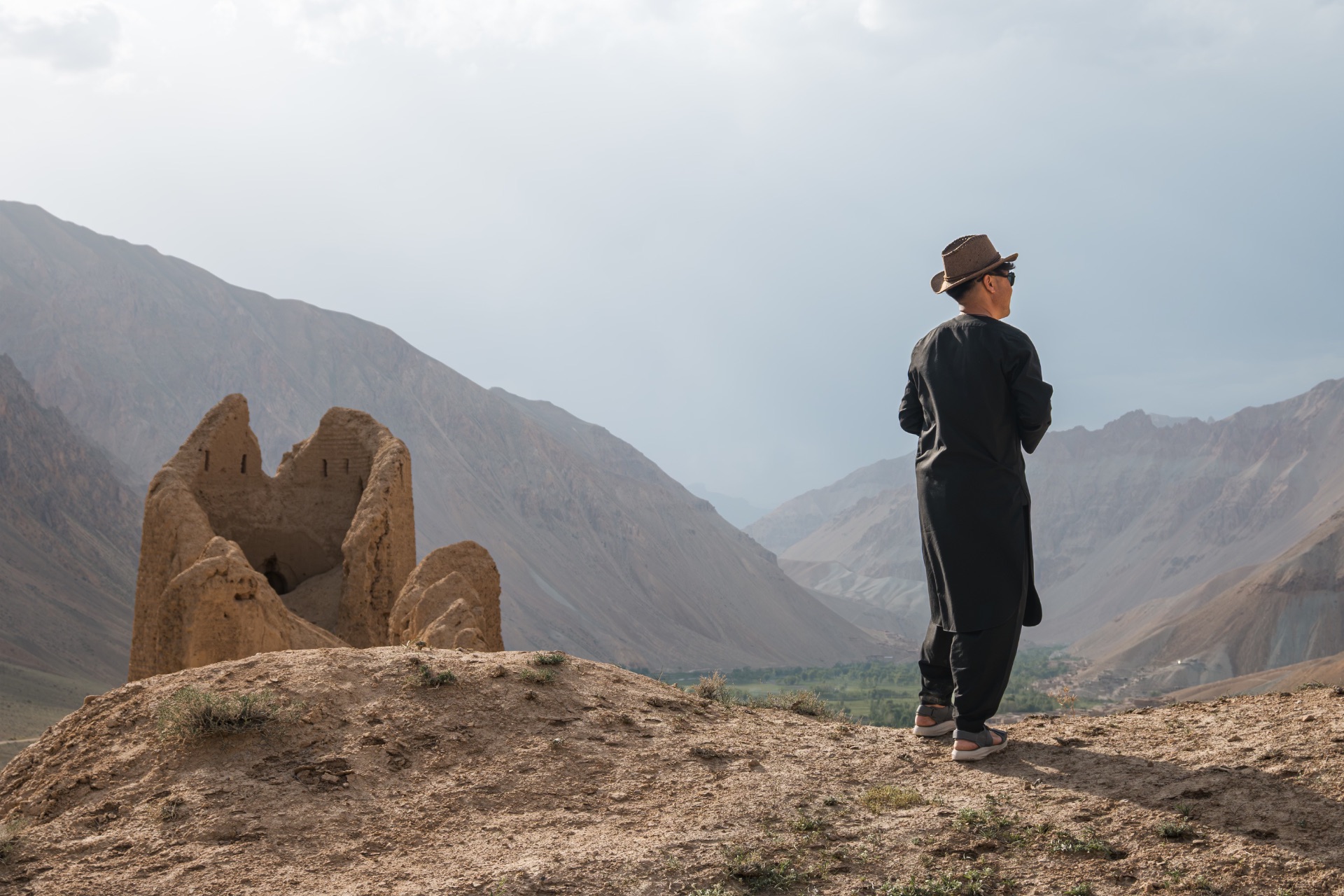
Today takes us away from the better-known sights and into the landscapes and communities surrounding Bamyan. We travel towards Chihil Burj, an authentic Afghan village known for its imposing fort, which is linked to a legendary love story. Here, the journey becomes an opportunity to experience local hospitality and everyday life. In the shade of the magnificent fort, we have the chance to enjoy a traditional picnic while taking in the surrounding mountains and the atmosphere of this remarkable place. Meeting local people and sharing a meal offers a glimpse into an Afghanistan rarely encountered by visitors. There are no grand tourist facilities here, only the fort, the village and the warmth of its people — reminders that some of the most memorable parts of a journey cannot be found on a map. Meals: breakfast, lunch and dinner Overnight: Bamyan
We continue west, leaving the Bamyan Valley behind and entering increasingly remote mountain country. The road winds through vast valleys and rugged terrain, with small settlements appearing between the mountains. Our destination is Ferozkoh, once the capital of the powerful Ghurid dynasty. Little remains of the medieval city itself, but its name belongs to an important chapter in the history of Afghanistan and the wider Islamic world. The journey here is as much about the road as the destination, travelling through landscapes that few outsiders ever have the opportunity to see. Meals: breakfast, lunch and dinner Overnight: Ferozkoh
Today brings one of the most extraordinary encounters of the journey: the Minaret of Jam. Reaching it requires a long and challenging journey through some of Afghanistan’s most remote and dramatic landscapes, but when the slender tower finally appears in the distance, the effort feels entirely worthwhile. Rising from the Ghur valley like a vision from another world, this magnificent 12th-century monument is one of the great surviving treasures of the Ghurid era. Its intricate brickwork, extraordinary setting and almost dreamlike presence make it the kind of sight that stays with you forever. From the minaret, we continue towards Chishti Sharif, a place deeply connected with the Sufi tradition and the spiritual heritage of western Afghanistan. Here, we spend the evening and night in a traditional Afghan guesthouse, sharing in the simple rhythms of local life. It is an opportunity to experience Afghanistan in a deeply personal way: enjoying a home-cooked meal, sitting together as the evening unfolds, and sleeping as Afghan families have done for generations, surrounded by mountains, silence and genuine hospitality. Meals: breakfast, lunch and dinner Overnight: traditional Afghan guesthouse in Chishti Sharif
We continue west towards Herat, one of the great cultural capitals of the Persian world. The mountains gradually give way to broader valleys and plains as we approach a city that has been shaped by poets, scholars, artists and merchants for centuries. Herat was once a major crossroads of the Silk Road, connecting Central Asia, Persia and the lands further west. Arriving here feels like entering another world, one defined by poetry, architecture, gardens and an extraordinary artistic heritage. Meals: breakfast, lunch and dinner Overnight: Herat
Herat is a city of layers, where Persian poetry, Islamic scholarship, Timurid grandeur and Silk Road history remain woven into the fabric of everyday life. The city’s remarkable heritage includes the imposing Herat Citadel and the magnificent Friday Mosque, celebrated for its intricate tilework and monumental architecture. The remains of the Timurid Musalla, including the elegant minarets, recall the era when Herat stood at the centre of a great cultural renaissance. The tomb of Gowhar Shad, the influential Timurid queen and patron of architecture, adds another chapter to this remarkable story. Beyond the city lies Guzargah, home to the shrine of Khaja Abdullah Ansari, one of the most revered Sufi figures in Herat’s history. Set against the surrounding hills, it remains a place of pilgrimage, spirituality and quiet reflection. Meals: breakfast, lunch and dinner Overnight: Herat
We leave Herat behind and fly back to Kabul, crossing Afghanistan from west to east once more. With time in the capital, there is an opportunity to explore some of the places that make Kabul unique, perhaps discovering a market, meeting local people or simply taking in the atmosphere of a city that has witnessed so much of Afghanistan’s history. The journey may be approaching its end, but Kabul offers one more chance to look beyond the familiar image of Afghanistan and experience the city through its people, stories and everyday rhythms. Meals: breakfast, lunch and dinner Overnight: Kabul
Today, we leave Kabul once more and travel into Parwan, where mountains, valleys and historic sites create a landscape very different from the capital. The road takes us into quieter surroundings, offering another glimpse of rural Afghanistan and the communities that live among the Hindu Kush. It is a day to slow down, explore and appreciate the landscapes that have accompanied us throughout the journey, vast, rugged and surprisingly beautiful. Meals: breakfast, lunch and dinner Overnight: Kabul
Every journey eventually comes to an end. It is time to say goodbye to Afghanistan, but not before taking a final moment to reflect on the road travelled. From the blue lakes of Band-e Amir to the ancient stones of Balkh and the minaret rising from the Ghur valley, this journey has taken you across landscapes, centuries and cultures. Travelling by road, you have experienced Afghanistan beyond the headlines: through its remote valleys, historic cities and the people who bring its stories to life. You leave with photographs and memories, but also with a deeper connection to the country’s past and present. You have travelled through the whole story, and return home with stories of your own