10 days
From the blue lakes of Band-e Amir and the ancient ruins of Bamyan to the sacred city of Mazar-e-Sharif and the timeless beauty of Herat, this journey crosses some of Afghanistan’s most extraordinary landscapes and historic cities. Following ancient roads through forgotten kingdoms, Buddhist heritage, Sufi traditions and Silk Road history, 'Ariana: The Road Between Worlds' reveals a country where past and present, legend and reality, seem to exist side by side.
Your Ariana Expeditions guide and driver welcome you to Kabul and accompany you to your hotel, where you receive a short introduction to the journey ahead. There is time to exchange money and visit a local tailor, where you can have a traditional Afghan outfit made for your journey. Kabul unfolds through its hills, markets and historic streets. From Bibi Mahroo Hill, the city stretches beneath the surrounding mountains, while Mandawi Bazaar and the Bird Market offer an intimate glimpse of everyday life. Walking through the old quarters, we encounter Pul-e-Khishti Mosque, Chahar Chatta Bazaar and Pul-e-Bagh-e-Omumi, before reaching the distinctive Shah-Do-Shamshira Mosque. Throughout the day, there is space to meet people, observe daily life and begin to discover Kabul beyond its familiar images. meals: breakfast, lunch and dinner overnight: Kabul
Leaving Kabul behind, the road winds into the heart of the Hindu Kush, where wide valleys and mountain landscapes reveal a quieter side of Afghanistan. In Bamyan, we explore the ruins of Shahr-e Golghola, the legendary “City of Screams,” overlooking the valley below. Once a flourishing Silk Road settlement, its weathered walls still echo stories of travellers, merchants and empires. Nearby, the great Buddha niches rise from the sandstone cliffs, silent reminders of the Buddhist heritage that shaped this region for centuries. Standing beneath these monumental spaces, surrounded by mountains, offers a powerful sense of the many cultures that have left their mark on Afghanistan. Bamyan is more than a destination; it is a landscape where history, nature and memory come together. meals: breakfast, lunch and dinner. overnight: Bamyan
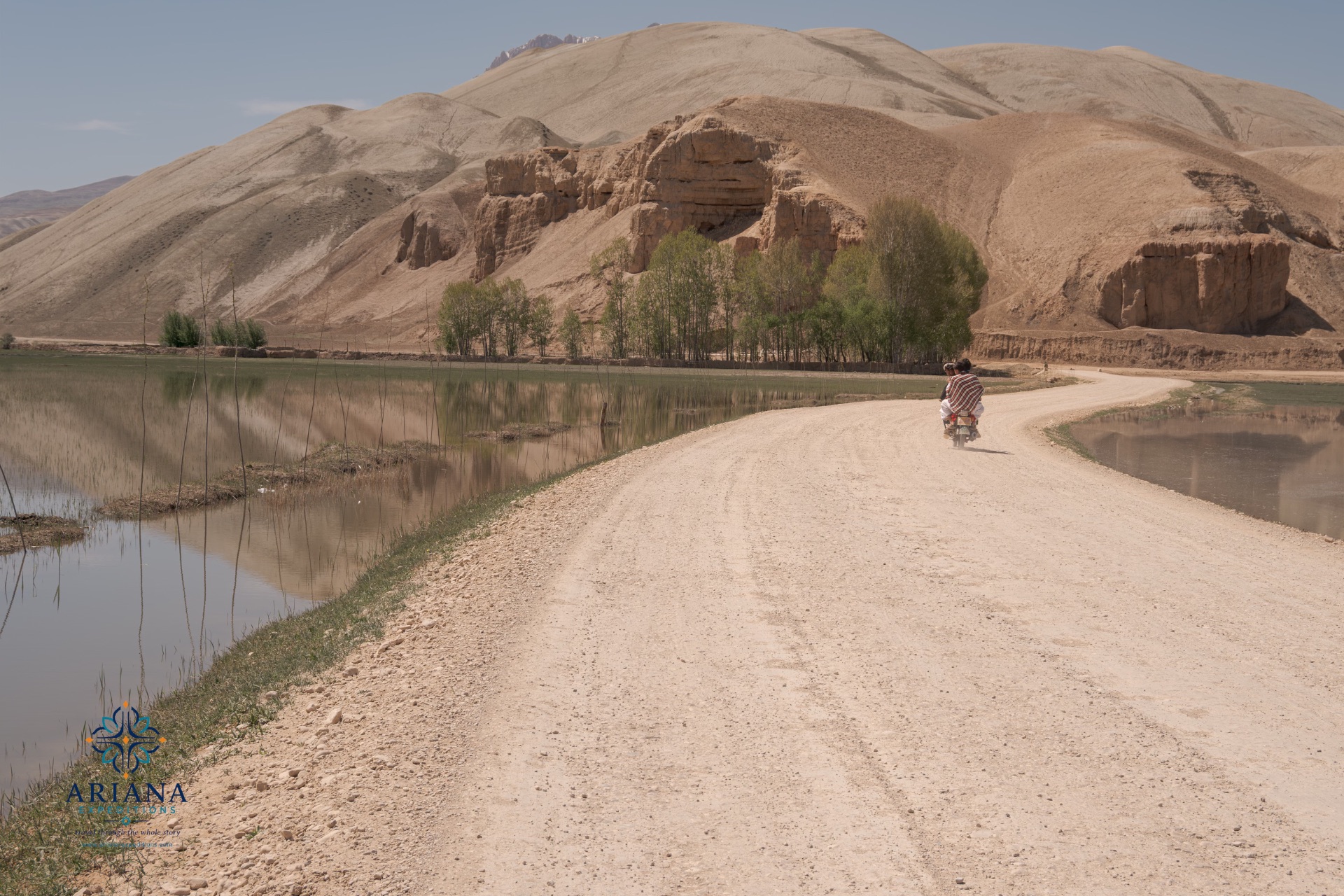
Today, we venture deeper into the Baba Koh mountains, where extraordinary landscapes are intertwined with stories passed down through generations. Band-e Amir, Afghanistan’s legendary chain of deep-blue lakes, is surrounded not only by dramatic cliffs but also by local traditions connected to Hazrat Ali. According to legend, the lakes were formed through his miraculous deeds, giving the landscape a spiritual dimension that remains part of its identity. The journey continues through the mountains to the Valley of the Dragon, where towering rock formations are woven into stories of Hazrat Ali and the dragon said to have once lived here. We then explore Shahr-e Zuhak, the ancient “Red City,” dramatically perched on a rocky ridge overlooking the valleys. Once a fortified settlement and an important strategic point along the routes through the region, its weathered ruins reveal layers of Bamyan’s rich and turbulent history. The reddish cliffs and remains of its defensive walls create a striking landscape where history seems to emerge directly from the mountains. Here, nature, legend and history become inseparable — revealing a side of Afghanistan where ancient landscapes are still alive with stories. Meals: breakfast, lunch and dinner. Overnight: Bamyan
Leaving Bamyan behind, we follow the road north-east towards Pol-e Khomri, crossing some of the most spectacular landscapes in central Afghanistan. The route winds through rugged valleys, mountain passes and vast open scenery, with the dramatic Hindu Kush unfolding around us. This is a day made for the road — with plenty of opportunities to stop, step out and take in the views or capture the changing landscape through your lens. Along the way, we pause for lunch before continuing towards the Salang Pass, one of Afghanistan’s most remarkable mountain crossings. As the landscape gradually changes, the journey itself becomes the destination: remote valleys, towering mountains and villages appearing almost unexpectedly along the road. By the end of the day, we reach Pol-e Khomri, where we settle in for the night. Meals: breakfast, lunch and dinner. Overnight: Pol-e Khomri
Today, we continue north towards Samangan, a historic crossroads where Buddhist, pre-Islamic and Islamic heritage have left their mark on the landscape. Our journey takes us to Takht-e Rustam, an extraordinary Buddhist site carved directly into the mountainside. At its heart lies a remarkable stupa hewn from solid rock, a quiet reminder of the Buddhist traditions that once flourished here along the ancient Silk Road. We then visit Jahan Numan Garden, a peaceful historic garden set against the surrounding mountains. Within the garden stands a former palace, whose more recent history offers another glimpse into Afghanistan’s turbulent past. During the Soviet occupation, the palace was used by Soviet forces, adding another layer to a site that has witnessed Afghanistan’s changing fortunes. From ancient Buddhist heritage to the echoes of more recent history, Samangan offers a fascinating glimpse into the many chapters that have shaped this region. Meals: breakfast, lunch and dinner. Overnight: Mazar-e-Sharif
Today, we follow the old roads of the north, into a landscape where empires rose and fell, religions crossed paths, and poetry became part of the cultural fabric. Few places embody this depth of history like Balkh, one of the great ancient cities of Central Asia, once a centre of Zoroastrianism, Buddhism and later Sufism. Among its quiet ruins stands Haji Piyada, the “Walking Pilgrim,” regarded as the oldest known mosque in Afghanistan. We also visit the place traditionally associated with the childhood of Jalaluddin Rumi, the great 13th-century poet and mystic. Born in Balkh, Rumi would go on to become one of the most influential voices of Persian literature and Sufi thought. We also discover the story of Rabia Balkhi, the semi-legendary poet whose name is woven into the earliest history of New Persian poetry. From ancient Balkh, we continue to Mazar-e-Sharif, where we encounter the old Gate of Charkent, a remnant of the 12th century and a reminder of the turbulent forces that once swept across these valleys. A day of ancient faiths, forgotten cities and enduring stories, where the Silk Road feels less like history and more like something still alive. Meals: breakfast, lunch and dinner. Overnight: Mazar-e-Sharif
The day begins in Mazar-e-Sharif with a visit to the city’s spiritual heart: the magnificent Blue Mosque and the shrine traditionally believed to be the resting place of Hazrat Ali. Beneath its celebrated turquoise domes, generations of pilgrims have come to pray, reflect and seek blessings. Around the shrine, stories and traditions have become inseparable from the identity of the city, part of the living heritage that makes Mazar-e-Sharif so captivating. Later, we leave the north behind and take to the skies, flying west towards Herat. The landscape changes dramatically as we cross Afghanistan’s vast interior, leaving the mountains and plains of Balkh behind for the ancient cultural heartland of Herat. By the time we arrive, we have entered a city shaped by Persian poetry, Islamic scholarship, art and centuries of Silk Road exchange. Herat awaits as another chapter of Afghanistan’s remarkable story. Meals: breakfast, lunch and dinner. Overnight: Herat
Herat is a city of layers, shaped by Persian poetry, Islamic scholarship, Timurid grandeur and centuries of movement along the Silk Road. Its skyline and streets reveal a remarkable architectural heritage, from the imposing Herat Citadel to the magnificent Friday Mosque, where intricate tilework and soaring arches reflect the city’s long tradition of craftsmanship. The remains of the Timurid era are found throughout the city, including the tomb of Gowhar Shad, the influential Timurid queen and patron of architecture whose legacy can be seen across Herat, and the celebrated minarets of Herat. Once part of the magnificent Musalla complex, the minarets are among the city’s most evocative landmarks; much of the complex was destroyed in 1885 during the British occupation, leaving these fragile towers as survivors of Herat’s Timurid golden age. At the Jihad Museum, a very different chapter unfolds, offering a window into Afghanistan’s more recent history. Beyond the city lies Guzargah, one of Herat’s most revered spiritual sites. Here, the shrine of Khaja Abdullah Ansari, one of the most influential Sufi figures in Afghan history, draws visitors to a peaceful setting beneath the surrounding hills. Herat reveals itself not through a single monument, but through the layers between them, a city where art, faith, poetry and history continue to meet. Meals: breakfast, lunch and dinner. Overnight: Herat
The final chapter of our journey brings us back to Kabul, where there is still time to discover a few of the places and stories that make Afghanistan’s capital unlike anywhere else. With the city as our backdrop, we explore some of Kabul’s distinctive corners and experience the contrasts that define it, a place where centuries of history, everyday life and a changing urban landscape exist side by side. No visit to Kabul would be complete without wandering through the famous Chicken Street. During the 1960s and 70s, it was a legendary stop on the Hippie Trail, drawing adventurous travellers from across the world in search of Afghan carpets, jewellery, handicrafts and the atmosphere of a city at the crossroads of East and West. Today, it remains a fascinating place to browse for a keepsake of the journey, perhaps a traditional Afghan coat, a piece of jewellery, a handicraft or another little treasure. As the journey draws to a close, Kabul offers one final opportunity to look beyond the familiar image of Afghanistan and experience the city through its people, stories and everyday rhythms. Meals: breakfast, lunch and dinner. Overnight: Kabul
On the first day, you arrived as a guest of Ariana Expeditions. Now, the time has come to wave you farewell, not as a guest, but as a friend. We don't say goodbye. We simply say: until we meet again.