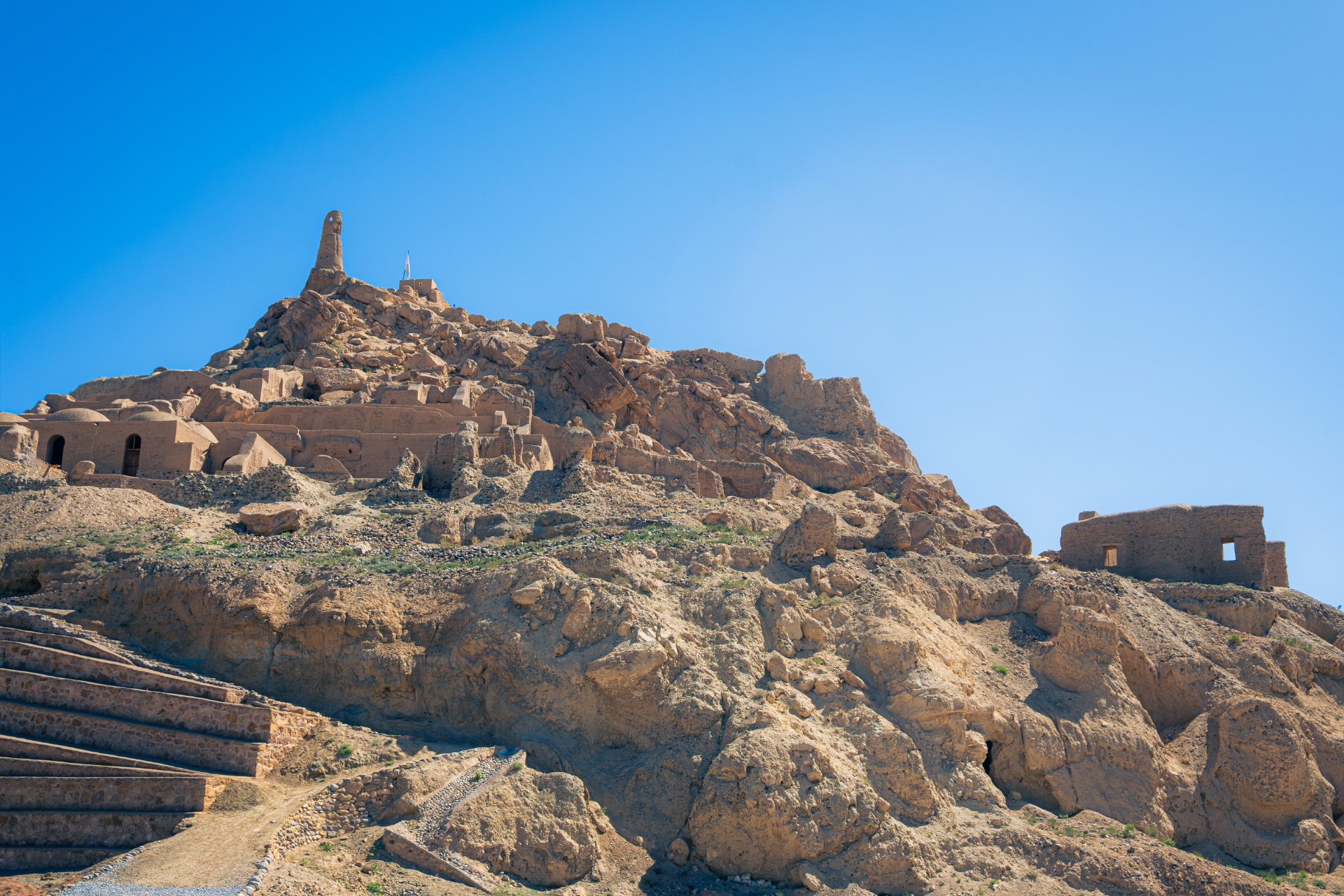
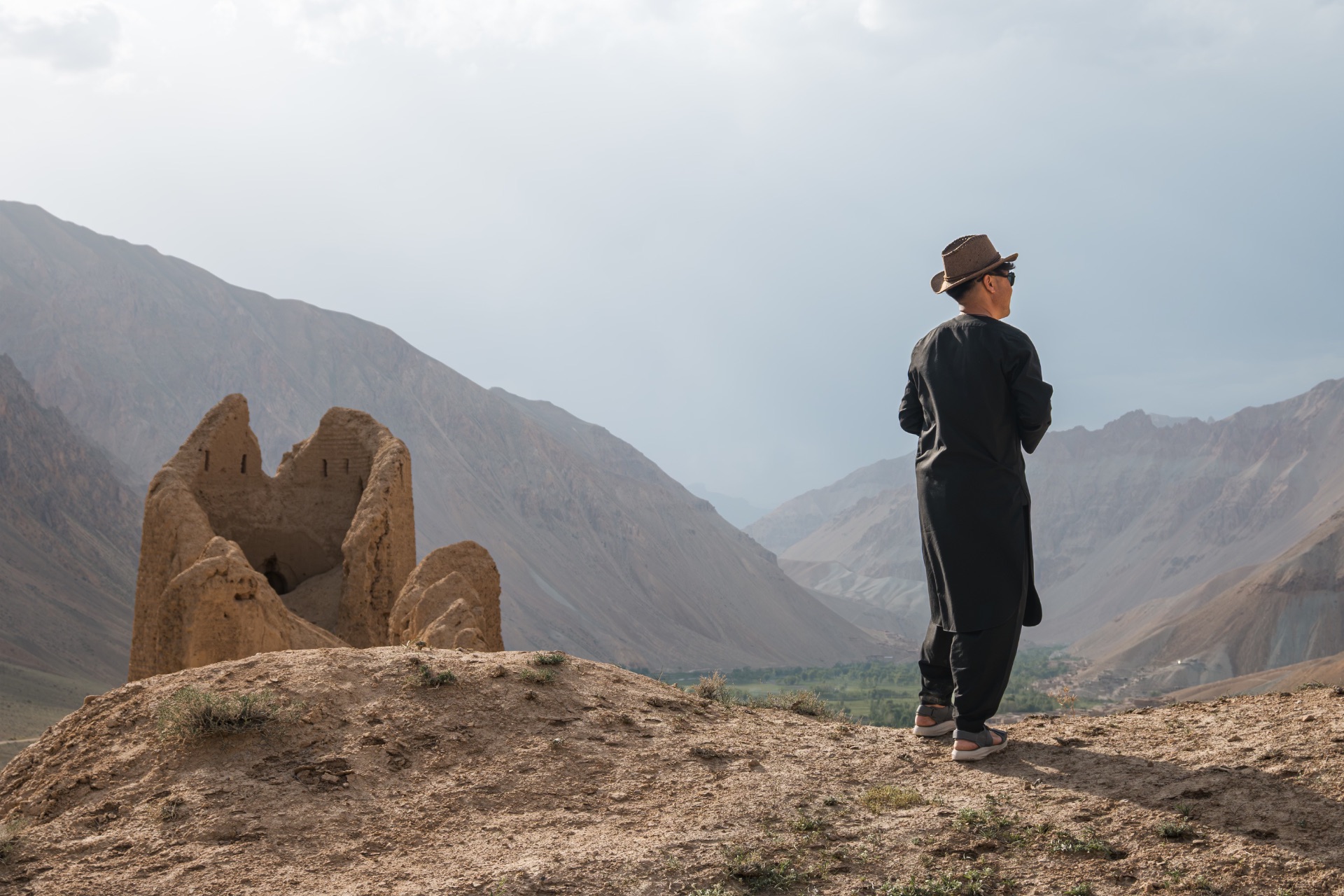
On a solitary hill rising from the heart of the Bamyan Valley stand the ruins of Shahr-e Gholghola — the City of Screams. From its walls, the entire valley seems to unfold below: the great cliffs of Bamyan, cultivated fields and the mountains beyond. Long before its haunting name became part of local memory, Gholghola occupied an important place in the story of Bamyan. The settlement stood along a branch of the Silk Road connecting the worlds of Central and South Asia, growing into a fortified centre overlooking the routes through the valley. Few places in Bamyan bring history and landscape together so powerfully. From a distance, Gholghola appears almost part of the hill itself. Only as you climb towards its summit do the remains of walls, towers and streets begin to reveal the city that once stood here.
History & Details
The history of Shahr-e Gholghola stretches back many centuries. Archaeological evidence from the fortified hill dates as far back as the sixth century, while the settlement continued to develop as Bamyan passed through Buddhist and later Islamic periods. Under the Ghurids, the city became part of a wider network of fortified settlements protecting this important crossroads. Its most famous chapter came in 1221, when the armies of Genghis Khan reached Bamyan during the Mongol campaigns across Central Asia. The fortified city resisted the Mongol siege, but the battle took a deeply personal turn when Mutukan, a grandson of Genghis Khan, was killed during the fighting. What followed became one of the darkest episodes in Bamyan’s history. The city was overwhelmed and devastated by the Mongol forces, bringing centuries of life on the hill to a violent end. Tradition remembers the ruins as Shahr-e Gholghola — the City of Screams, a name said to echo the destruction that befell its inhabitants. Whether every detail of the stories passed down through the centuries can be separated from legend is impossible to know, but the name has become inseparable from the memory of the place.
Gallery
Visitor Experience
“The path to Gholghola climbs gradually above the fields and houses of modern Bamyan. With every step, the valley opens a little further below, while fragments of ancient walls emerge from the earth around you. At the summit, the scale of the landscape becomes extraordinary. The cliffs of Bamyan stretch across the opposite side of the valley, mountains rise in every direction, and far below lies a landscape through which monks, merchants, armies and travellers once passed. Yet Gholghola is perhaps most powerful for what is no longer there. Among its weathered walls, it takes imagination to reconstruct the city that once occupied this hill — its houses and fortifications, its inhabitants and the roads connecting it to a much wider world. It is a place to linger rather than simply visit: a silent city above Bamyan, carrying the memory of the Silk Road, the Mongol conquests and centuries of lives now hidden beneath the earth.”
Don't see a trip that fits? We can build one entirely around the places you want to see.
Plan a Custom Visit