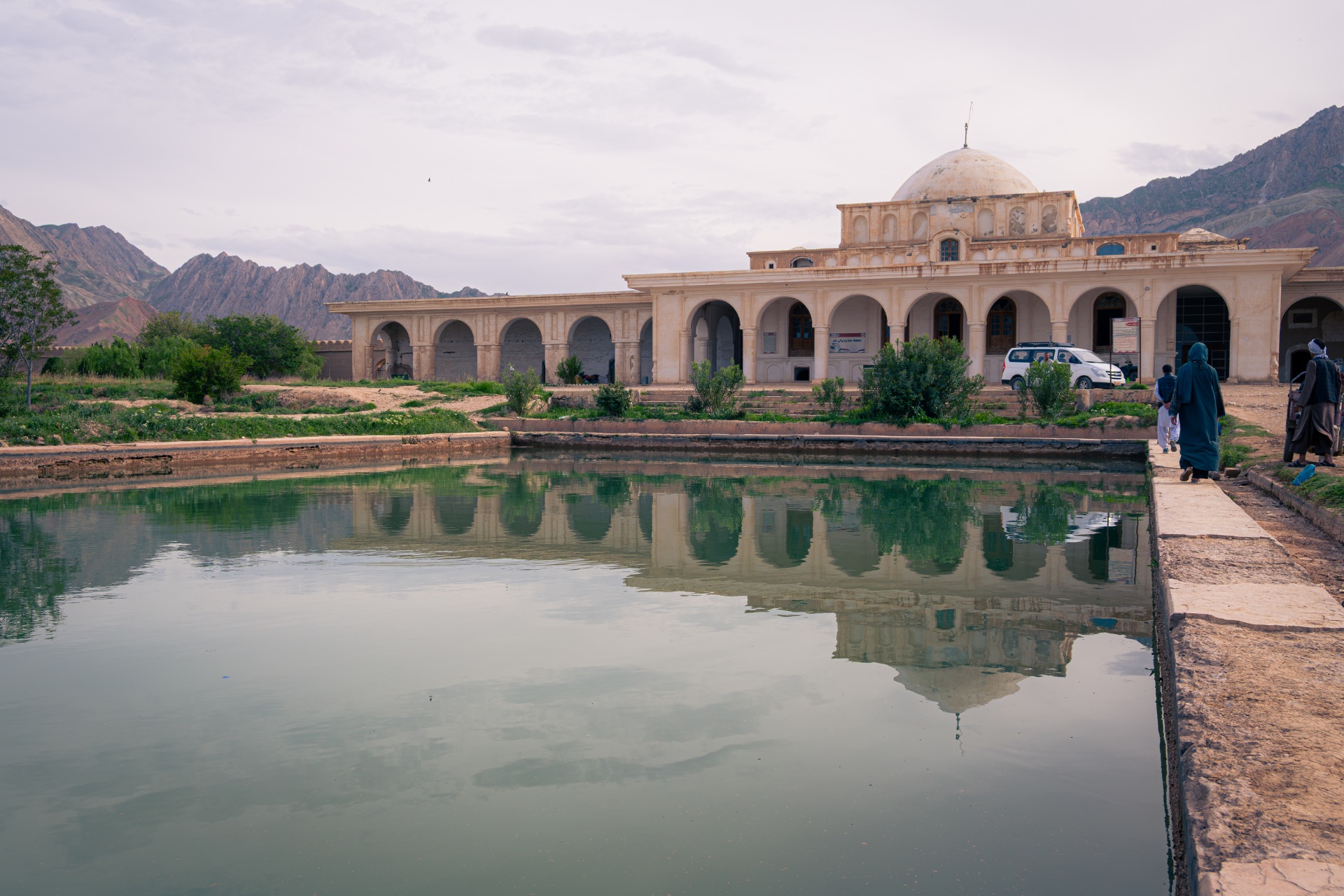
A Royal Garden in Khulm Behind high walls on the edge of the historic town of Khulm lies an unexpected glimpse into Afghanistan’s royal past. Bagh-e Jahan Nama — the Garden of the World — is a peaceful ensemble of gardens, pathways and trees surrounding an elegant nineteenth-century palace. Far removed from the ancient ruins and medieval monuments found elsewhere in northern Afghanistan, Jahan Nama tells a more recent story. It belongs to an era of kings and courtly life, when Afghanistan’s rulers created gardens and residences inspired by older Persian traditions while shaping a changing country. The result is one of northern Afghanistan’s more surprising historic places: part palace, part garden, and a witness to more than a century of Afghan history.
History & Details
Jahan Nama Palace was built around 1890–1892 during the reign of Amir Abdur Rahman Khan, the ruler who played a defining role in the formation of modern Afghanistan. The residence was surrounded by an extensive walled garden, creating a secluded royal retreat near the important trading town of Khulm, historically known as Tashqurghan. Its story did not end with the monarchy. During the twentieth century, the palace passed through very different chapters of Afghan history. Plans were made to transform it into a museum, while restoration work attempted to preserve the complex. An earthquake in 1976 caused serious damage before those plans could fully be realised. War brought another transformation. During the Soviet-Afghan conflict, the peaceful royal grounds were used for military purposes. Soviet forces occupied parts of the complex, and traces of that period became another layer in the history of a place originally created for beauty and retreat. In later years, restoration efforts began bringing the palace and gardens back to life, preserving not only the architecture but also the memory of the very different eras through which Jahan Nama has passed.
Gallery
Visitor Experience
“Entering Bagh-e Jahan Nama feels like discovering a quieter chapter of Afghanistan. Beyond the walls, the noise of the road fades and the palace appears between trees and pathways, standing at the heart of its garden much as it did more than a century ago. Walking through the grounds reveals details that are easy to overlook from a distance: the proportions of the palace, traces of earlier decoration, old trees and the relationship between architecture, water and garden that has shaped Persian and Central Asian garden traditions for centuries. But perhaps the most fascinating part of Jahan Nama is knowing how many different worlds have occupied the same space. A garden created for an Afghan amir became a witness to monarchy, attempts at modernisation, earthquake, war and restoration. Jahan Nama is not simply a palace surrounded by a beautiful garden. It is a place where Afghanistan’s royal past and turbulent twentieth century quietly share the same walls.”
Trips That Visit Bagh-e Jahan Nama

Don't see a trip that fits? We can build one entirely around the places you want to see.
Plan a Custom Visit